Have you ever been stuck in South American traffic, seen thousands of motorcycles weaving through cars, and thought, “There must be a better way to get things from A to B”?
Or have you talked to a local artisan or small restaurant owner who makes amazing products but can’t reach customers outside their neighborhood?
If so, you might have a golden idea. Starting a delivery business in South America isn’t just a way to make money; it’s an opportunity to solve real people’s daily problems. The market is growing, and there’s still plenty of room.
I’ve been here in the startup world for quite some time, and let’s be honest, it’s a wild, but rewarding ride. This guide isn’t just theory; it’s the practical, ground-level advice I wanted when I started.
So grab a coffee, and let’s see how you can turn that spark into a successful delivery service.
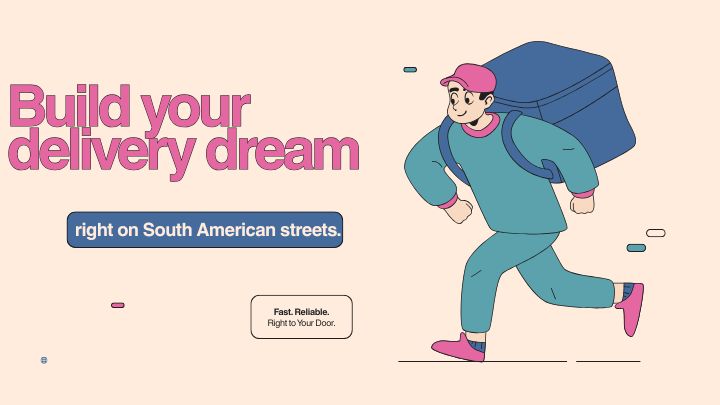
Why South America? Delivery Business is Booming in Latin America
You’re not wrong. Demand for delivery services has exploded across the continent. The pandemic accelerated an already existing habit. People now expect groceries, hot food, pharmacy items, and electronics to all be delivered to their homes.
And the best part: In many cities, big global players haven’t fully established themselves yet. This means there’s a huge opportunity for local, flexible businesses, those that understand their city’s culture and challenges.
- Real-Life Example – Hyper-Local Delivery in Lima
Real-life example: Imagine a pandería (bakery) in Lima. Loyal customers in the morning, but what about those office workers who are on the other side and would kill for a fresh medlaruna at 3 a.m.? A hyper-local delivery service could be their hero.
Your Step-by-Step Blueprint to Start a Delivery Business in South America
Starting a business can feel overwhelming, but each step makes it easier.
Step 1: Find Your Niche (Don’t Try to Be Everything)
This is the most important decision. Simply saying “a delivery service” is too vague. But “fastest delivery of organic pet food in Medellín” is a business.
Ask a few questions,
- What’s missing in your city? No late-night pharmacy delivery? Hard to find artisan coffee shops?
- What are you passionate about? Love books? Consider specialty delivery for independent bookstores.
- What can you realistically manage? Have a temperature-controlled food complex, perhaps start with non-perishable goods or documents first.
Personal insight: There was a guy in Santiago who started a delivery service just for board games and hobby supplies. He partnered with some niche stores and now has a dedicated customer base. Choose a niche; that’s how you’ll stand out.
Step 2: Look at the Numbers – Business Model & Finances for Delivery Services
Now it’s all about money. It’s not a lot of work, but it’s what will keep your doors open.
Choose a Model:
- Marketplace Model: Connect customers with multiple stores (like a local Etsy). You charge a commission.
- Logistics-Only Model: You don’t keep inventory. Businesses use your app/website to deliver their orders. Charge a delivery fee.
- Inventory-Led Model: You buy, stock, and deliver. Higher risk, higher reward.
Consider costs: technology (app/website), delivery staff (employees or freelance repartidores), marketing, legal, and admin fees.
Practical tip: For beginners, it’s easiest to start a logistics-only or marketplace model. Less upfront capital is required, and you can test the market.
Step 3: Legal Setup for Delivery Businesses in South America (You’ll Get Over It)
Yes, bureaucracy in South America can be an adventure. But it’s manageable.
Business structure: Often, a simplified structure like a S.A.S. (Sociedad por Acciones Simplificada) may be required in countries like Colombia, Peru, and Argentina.
Tax ID: Get your tax number (RUC in Peru, CUIT in Argentina, CNPJ in Brazil). For small businesses, a specialist accountant will be very useful.
Contracts: Keep clear contracts with drivers, whether employees or partners. Understand local labor laws.
Empathy moment: This step scares everyone. Don’t try to be a hero. Hire a local lawyer or accountant for an hour; this is an investment, not an expense.
Step 4: Build Your Delivery Dream Team
Drivers are the face of your business. Their behavior directly impacts your reputation.
- Hire reliable people: Local people who know the city’s streets and shortcuts.
- Equip them with tools: Provide them with reliable smartphones, power banks, and branded gear (t-shirts or delivery bags).
- Focus on safety: Driver safety is very important in large cities. Establish safety protocols, tracking apps, and clear communication channels.
Step 5: Choose a Tech Stack (Start Simple for Your Delivery Startup)
You don’t need a million-dollar app on day one.
Start with a simple website or WhatsApp: A clean website with a menu/product list and phone/WhatsApp orders is a perfect MVP.
Use off-the-shelf tools: Track orders with Google Forms, Airtable, or simple delivery management software.
Scale later: As you grow, you can add a custom mobile app and real-time GPS tracking.
Real Challenges (and Solutions) in South American Delivery Services
True, not everything will be smooth. Knowing the hurdles is half the battle.
- Logistics & Traffic Challenges
Logistics & traffic: São Paulo, Lima, Bogotá, traffic is notorious.
Solution: Use motorcycles and bicycles for the last mile. Promise realistic travel times.
- Payment Issues
Cash is king: Many people are still unbanked or prefer cash.
Solution: Offer cash-on-delivery, but have a secure process in place so drivers can deposit cash daily.
- Safety & Security Concerns
Safety & security: A real concern.
Solution: Avoid openly displaying expensive items. Use discreet packaging and secure gateways for online payments.
Marketing Your Delivery Business in South America
Made it, so how do you get them?
1. Hyper-Local Focus
- Hyper-local focus: Don’t try to conquer the entire city all at once. Choose 1-2 neighborhoods and become their go-to service.
2. Partner with Local Businesses
- Partner with local businesses: Offer them a good deal. They get more sales, and you have a built-in customer base. Win-win.
3. Use Social Media
- Use social media: Showcase deliveries on Instagram and Facebook, highlight partner businesses, and run targeted ads in your service area.
4. Word-of-Mouth Strategies
- Word-of-mouth: Offer referral discounts. A happy customer telling a friend is more powerful than any ad.
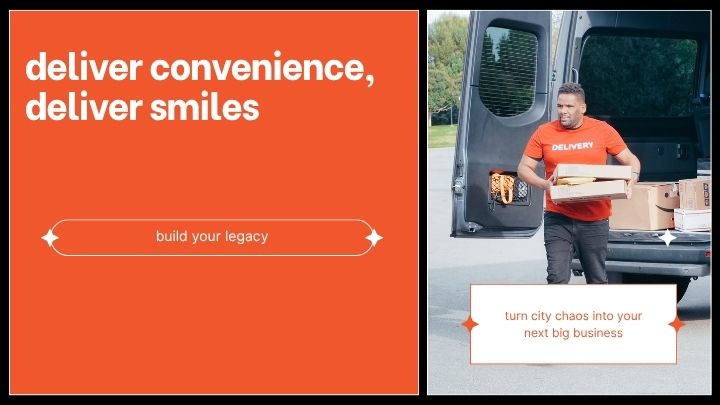
Conclusion: Your Journey Begins Now – Delivery Business in South America
Starting a delivery business in South America is a thrilling opportunity. It’s a chance to be part of a retail revolution, support local economies, and create your own niche.
It’ll definitely be a test; one day, the driver might be too busy, and traffic might ruin the delivery. But the day will come when a small business owner will thank you for doubling their sales, or a customer will message you saying you made their week.
That feeling makes everything worthwhile.
Next Step – From Reading to Action for Aspiring Delivery Entrepreneurs
Your mind will be brimming with ideas. Let’s take a concrete step.
Do this this week: Take a 30-minute walk in your chosen neighborhood. Visit stores. Talk to teen small business owners. Ask them: “What do you think is the biggest problem in getting your products to customers?”
Listen carefully. Your entire plan for business in South America might be hidden in their answers.
Good luck, future entrepreneur. You’ll do it.
Read: How to Start a Tech Business in Estonia: The World’s Digital Hub
